
11 Best M&A Workflow Platforms for Modern Investment Bankers
Merger and acquisitions (M&A) teams don’t have the luxury of getting things “mostly right.” Every model, memo, and deck needs to be airtight—and done yesterday. AI-powered platforms are closing the long-standing gap between speed and precision by automating the analytical backbone of M&A: parsing diligence materials, surfacing defensible insights, and feeding them directly into the models, CIMs, and pitch decks deal teams produce — so first drafts land closer to client-ready and survive senior review.
In this guide, we break down the top M&A deal management software reshaping each stage of the M&A workflow—and how they fit into the modern deal stack.
Top Mergers and Acquisitions Tools at a Glance
Tool | Best For | Features |
|---|---|---|
Hebbia | Document-heavy deal workflows and agentic AI | - Agentic workflow orchestration - Adapts to firm-specific workflows - Shared institutional database for collective memory - Deep document understanding - End-to-end workflow automation - Excel & financial modeling integration - Zero data retention - Fewer review cycles - Time savings - Branded deliverable generation - Integrated financial data sources |
Anthropic | AI-driven strategic reasoning | - Long-context reasoning - Analytical reasoning engine - Structured summarization - Flexible API integration |
OpenAI (ChatGPT) | Quick scenario modeling & reasoning | - ChatGPT Agent - Long-context processing - Broad ecosystem integration |
Capital IQ Pro | Integrated market intelligence | - Document Intelligence - ChatIQ assistant - Integrated data coverage - Click-through source traceability |
Preqin AI | Private markets intelligence | - Private markets coverage - Fundraising intelligence - Performance benchmarking - Deal and fund sourcing |
Datasite | Secure due diligence and document management | - Virtual data room - AI-driven redaction and search - Audit trails and access controls - Deal analytics dashboard |
Intralinks | Enterprise data collaboration | - VDRPro™ and DealCentre AI - ISO 27701-certified security - AI-powered services |
Midaxo | Managing multiple deals or complex integrations | - End-to-end workflow management - Collaboration and visibility - Compliance and audit tracking |
DealRoom | End-to-end deal management with pipeline to integration | - Unified deal lifecycle management - Automated task management - Built-in VDRs - Pipeline dashboards |
Intapp DealCloud | Relationship intelligence and pipeline management | - AI-powered relationship management solution - Unified dashboard for firm-wide deal flows - Communication capture, summarization, and archival - Integration with Intapp Data |
Firmex | Secure document sharing and organization | - VDR with full access controls and risk management tools - Built-in Q&A tool to support diligence - 24/7 expert support with unlimited, specialized training |
1. Hebbia
Best for: Document-heavy deal workflows and agentic AI
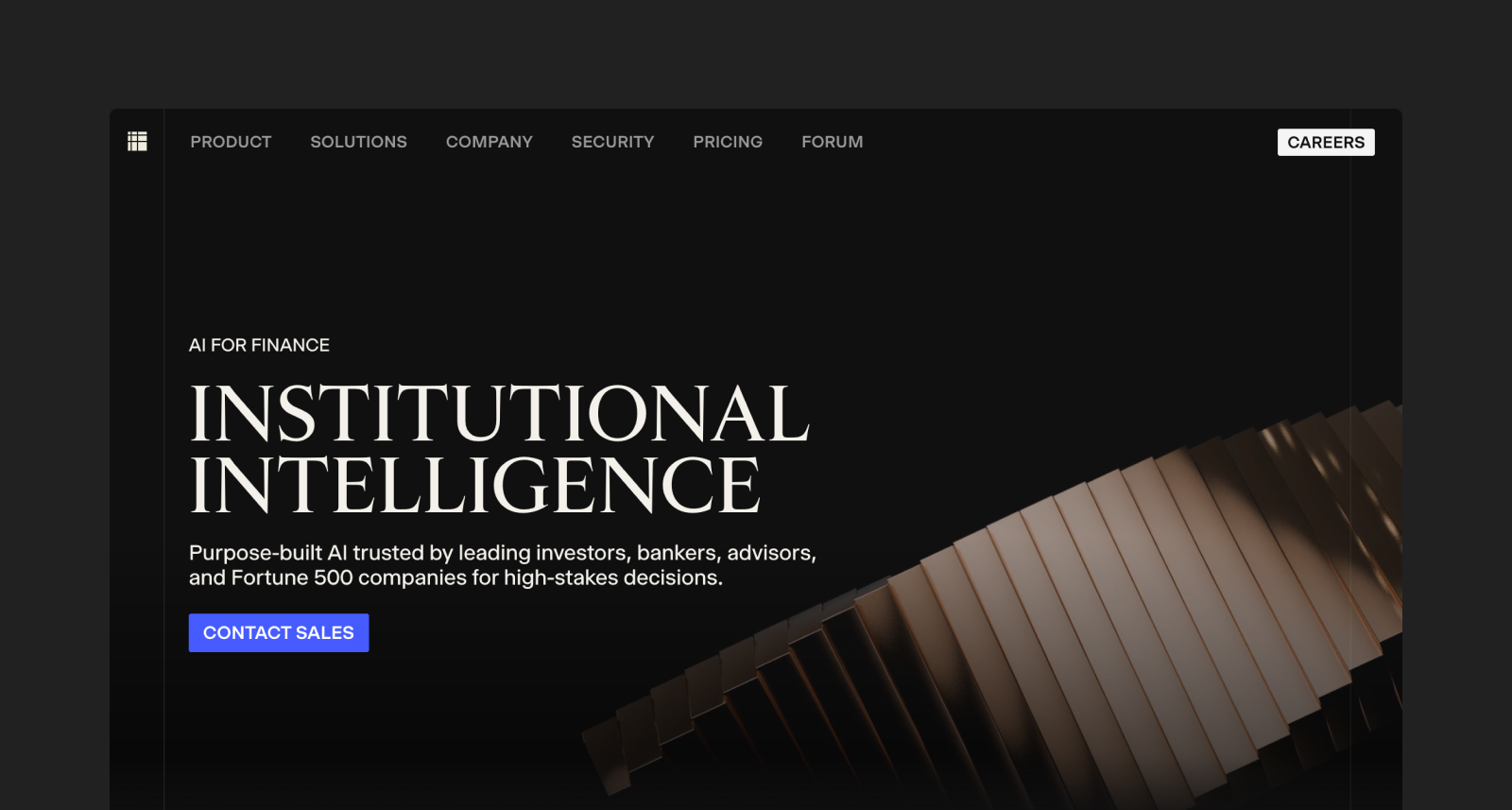
Built specifically for rigorous end-to-end finance workflows, Hebbia is one of the best M&A tools on the market, enabling deeper analysis and faster, client-ready output across the deal. Most AI tools focus on single steps (such as data input or diligence tagging) and one-off questions. Hebbia supports the entire deal process—from research and modeling to client-ready decks—in one connected system.
Hebbia automates time-intensive work, such as parsing contracts, diligence notes, and filings to produce structured, source-linked insights. With Hebbia Skills, you can encode your firm’s specific workflows into the platform, so analysis and outputs are produced exactly as required.
After analysis work is complete, you can pull structured, source-linked inputs straight into Excel models, first-pass CIM sections, and supporting memos — accelerating the synthesis that feeds these documents while your team owns the narrative and positioning.
Through Hebbia Projects, every document uploaded, deliverable generated, and chat published with Hebbia is automatically indexed into a shared, searchable database that your whole firm can use to inform future deals.
Key features
- Agentic workflow orchestration: AI agents specialized for finance automate multi-step deal processes—from due diligence to modeling to deck creation—reducing manual handoffs and ensuring outputs tie back to verified data.
- Adapts to firm-specific workflows: Conforms to proprietary workflows with fully customizable AI agents, enabling firms to retain and enhance their procedural edge.
- Shared institutional database for collective memory: All inputs and outputs within Hebbia (including imported documents and downstream analysis) are automatically integrated into a searchable database that your whole firm can use when starting a new deal.
- Deep document understanding: Reads full contracts, filings, memos, and other VDR contents with contextual accuracy to surface clauses, figures, and commentary instantly.
- End-to-end workflow automation: Links research, modeling, and presentation in a single, auditable process.
- Excel & financial modeling integration: Refreshes discounted cash flow (DCF) models, comparable company analysis, and projections directly in Excel using verified data from connected sources.
- Zero data retention: Meets institutional compliance standards with full traceability, access controls, and audit trails.
- Fewer review cycles: Cuts 20–40 hours of rework per deal by producing first drafts that are clean, formatted, and source-linked — so analysts spend less time correcting and reviewing
- Branded deliverable generation: Generates fully formatted decks and reports with charts, tables, and citations in place.
- Integrated financial data sources: Connects to S&P, CapIQ, PitchBook, FactSet, and SEC filings for verified data accuracy.
2. Anthropic
Best for: AI-driven strategic reasoning
Anthropic is the team behind the Claude family of AI models, built to reason over complex information rather than just predict the next word. Claude has several models, including Claude Opus 4.8, capable of analytical reasoning over large volumes of text in a single pass. It’s not a finance-specific tool, but it can help with various M&A tasks, such as processing diligence documents and scrutinizing first-pass IC memos.
It also integrates with various data platforms, such as Factset,, Databricks, and CapIQ. That said, Claude is still a general-purpose model, not a dedicated finance tool. It won’t produce audit-ready, source-linked outputs with clickable in-line citations like Hebbia can.
Key features:
- Long-context reasoning: Processes hundreds of pages at once to maintain continuity across filings, transcripts, and diligence docs.
- Analytical reasoning engine: Handles multi-step logic for modeling narratives, ratio analysis, or sensitivity commentary.
- Structured summarization: Extracts and organizes key information into readable, high-level summaries.
- Flexible API integration: Can be embedded into custom workflows or vertical finance applications like Deliverables AI.
3. OpenAI (ChatGPT)
Best for: Quick scenario modelling & reasoning
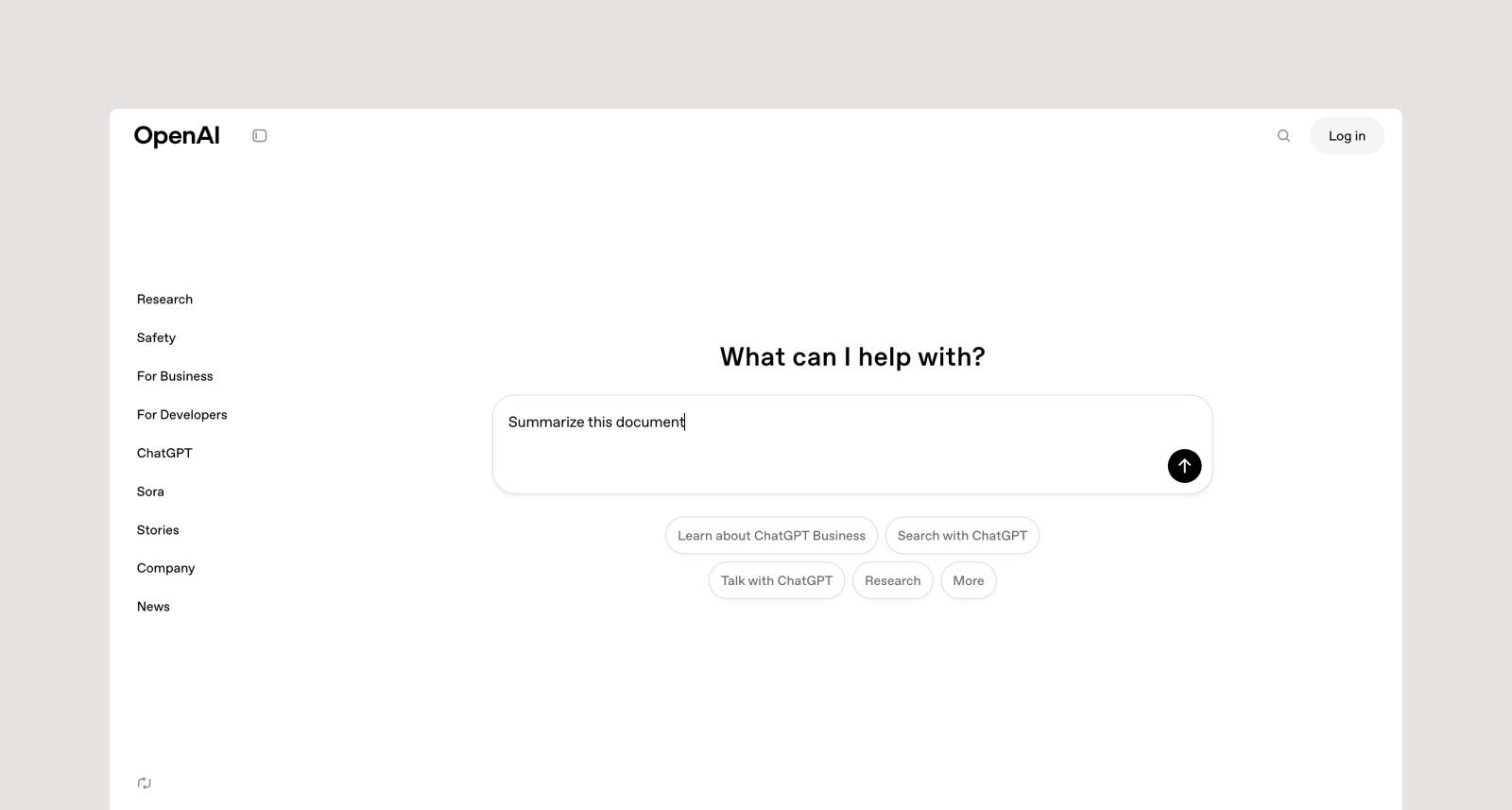
With the release of ChatGPT Agent and GPT-5, OpenAI has expanded beyond simple prompting. You can now run multi-step processes, fill spreadsheets, and interact with live data sources. ChatGPT is used by some deal teams for ad hoc research and drafting — digesting diligence reports, summarizing filings, and structuring first-pass materials.
For dealmakers, the appeal lies in speed and flexibility. Still, it lacks deep financial integrations, so users must manually verify data, trace sources, and ensure compliance before anything lands in a client deck. At scale, that process can prove impractical and slow compared to dedicated AI tools for M&A.
Key features:
- ChatGPT Agent: Automates multi-step workflows—organizing files, filling Excel templates, or rerunning recurring analyses.
- Long-context processing: Reads and summarizes large documents, transcripts, and filings in one query.
- Broad ecosystem integration: Works across Microsoft Copilot, Notion, and other enterprise tools to support cross-workflow automation.
Other Software Supporting Stages of the M&A Process
While the tools above can manage M&A end-to-end—from diligence and modeling to reporting—there are also specialized platforms that focus on just one part of the process. The tools below don’t run the full deal cycle, but they can help with specific stages like research, diligence, or data management.
4. Capital IQ (Chat IQ)
Best for: Integrated market intelligence
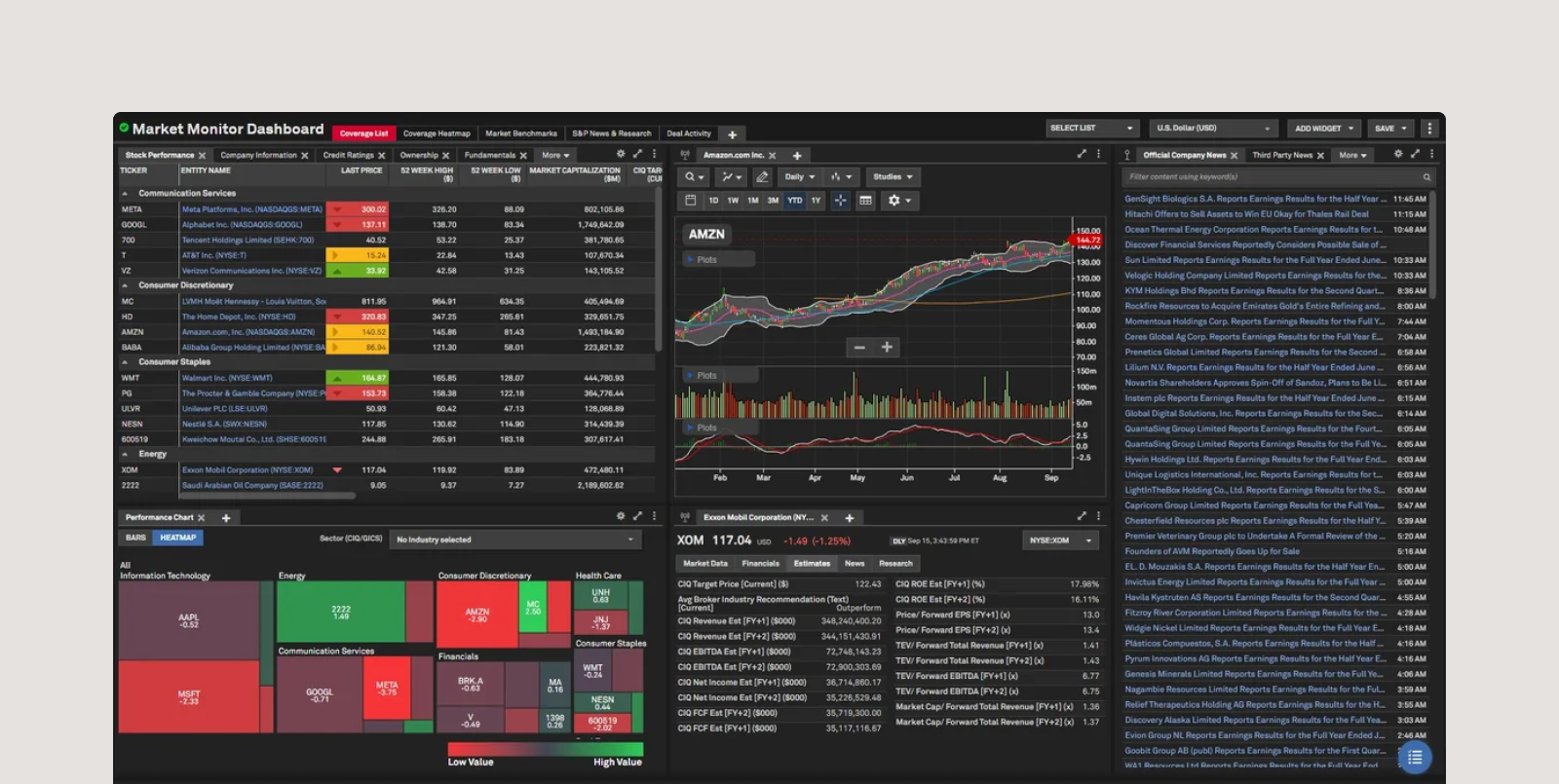
ChatIQ, developed in collaboration with S&P’s Kensho AI lab, serves as an in-platform assistant for competitive analysis, market monitoring, and company research, specifically tailored for banking and buy-side users. You can surface key insights faster by combining S&P’s vast structured datasets with natural language search, summarization, and sentiment analysis.
Instead of comprehensive M&A execution, Capital IQ Pro supports the research and diligence stages by letting you query millions of filings, transcripts, and investor presentations for financial highlights.
Key features:
- Document Intelligence: GenAI-powered document search and smart summarization with sentiment scoring based on natural language processing (NLP).
- ChatIQ assistant: Conversational agent for multi-document processing, based on large language models (LLM) and trained on Capital IQ data for company, industry, and sector research.
- Integrated data coverage: Combines proprietary financials, pricing, and reference data across equity and fixed income.
- Click-through source traceability: Ensures the team can verify every output directly in filings or reports.
5. Preqin AI
Best for: Private markets intelligence
Preqin is a leading data and intelligence platform for private markets, recently acquired by BlackRock to deepen portfolio-level analytics. It gives investors, fund managers, and advisors access to performance, fundraising, and deal data across private equity, venture capital, hedge funds, real estate, private debt, and infrastructure.
Preqin doesn’t automate M&A execution; instead, it supports the research and diligence phases by helping teams identify top managers, benchmark funds, and uncover early investment opportunities. Its private-market coverage and proprietary performance data make it a key partner for sourcing and valuation.
Key features:
- Private markets coverage: Deep data across private equity, venture capital, private debt, real estate, infrastructure, and secondaries.
- Fundraising intelligence: Access to investor databases and capital-raising trends for faster outreach.
- Performance benchmarking: Compare fund and manager performance across geographies and strategies.
- Deal and fund sourcing: Identify active funds, GPs, and LPs to strengthen due diligence pipelines.
6. Datasite
Best for: Secure due diligence and document management
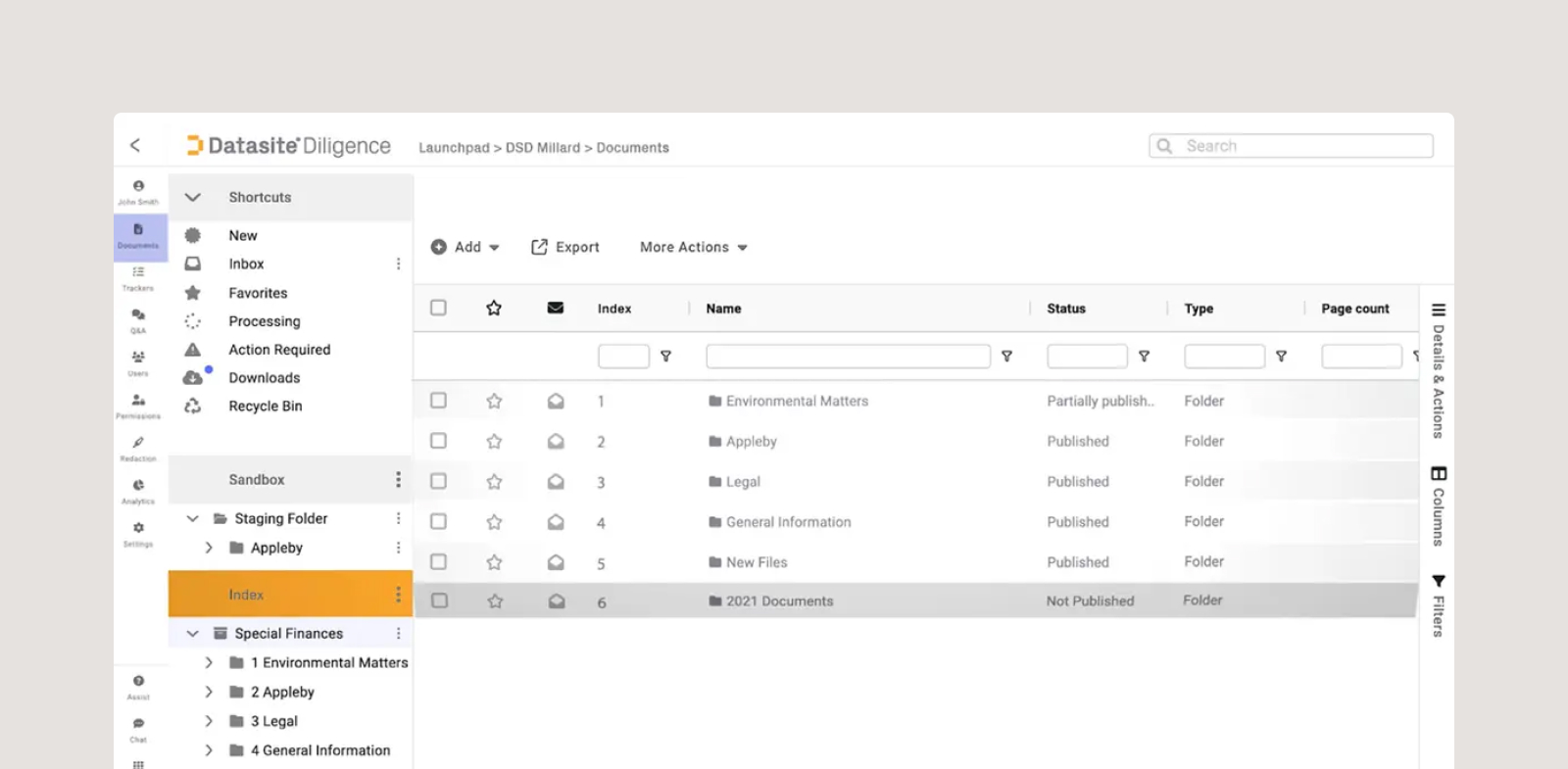
Datasite is a secure VDR platform designed to manage the document-intensive aspects of M&A. It helps deal teams organize, redact, and share sensitive information during diligence, offering a controlled workspace for collaboration between bankers, lawyers, and clients.
Datasite’s AI-powered features, such as automated redaction and document classification, can help streamline administrative tasks—with its core focus being data management, not analysis or modeling. With Datasite’s recent acquisition of Grata, the platform now integrates private-market intelligence covering 21 million companies and an AI-powered deal-sourcing platform.
Key features:
- Virtual data room: Centralizes a secure environment for deal document management.
- AI-driven redaction and search: Speeds up diligence prep by tagging and classifying sensitive files.
- Audit trails and access controls: Ensure compliance with global regulatory standards.
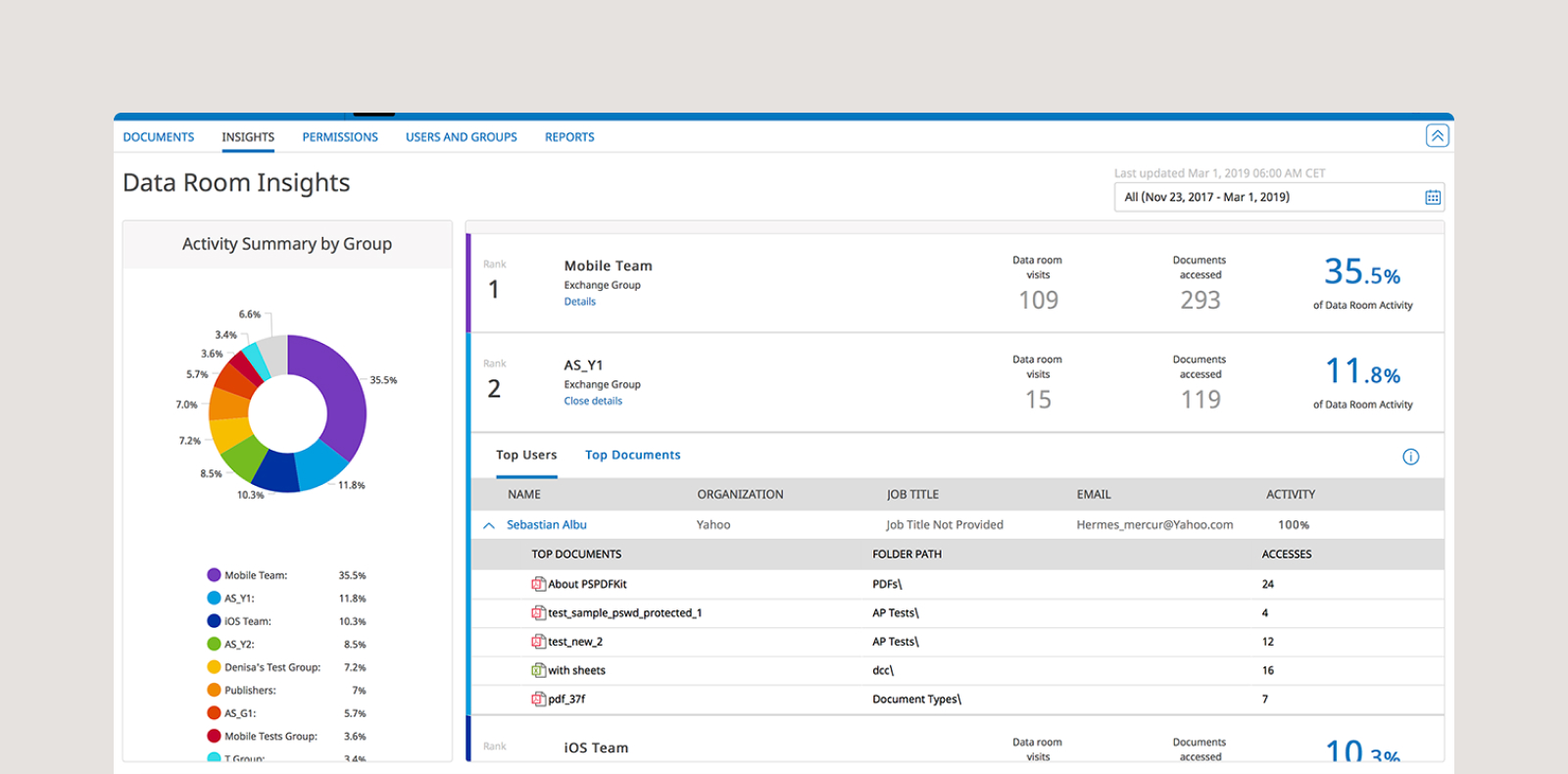
- Deal analytics dashboard: Tracks activity, engagement, and file interactions for internal oversight.
7. Intralinks
Best for: Enterprise data collaboration
Intralinks is a long-established VDR platform used across M&A, private equity, and capital markets. It focuses on secure document sharing and collaboration, helping dealmakers manage diligence, fundraising, and investor reporting efficiently and compliantly.
Its AI capabilities are powered by DealCentre AI, Intralinks’ built-in intelligence layer that enhances its flagship VDRPro product. DealCentre AI supports redaction, translation, and automated reporting, helping teams move faster through document-heavy deal workflows.
Key features:
- VDRPro™ and DealCentre AI: Secure data room software enhanced with AI for faster document management.
- ISO 27701-certified security: Uses end-to-end encryption, multi-factor authentication, and role-based access controls, with full audit logs that track every document view, download, and edit.
- AI-powered services: Smart redaction, nondisclosure agreement (NDA) tracking, and data extraction to cut down on manual admin work.
8. Midaxo
Best for: Managing multiple deals or complex integrations
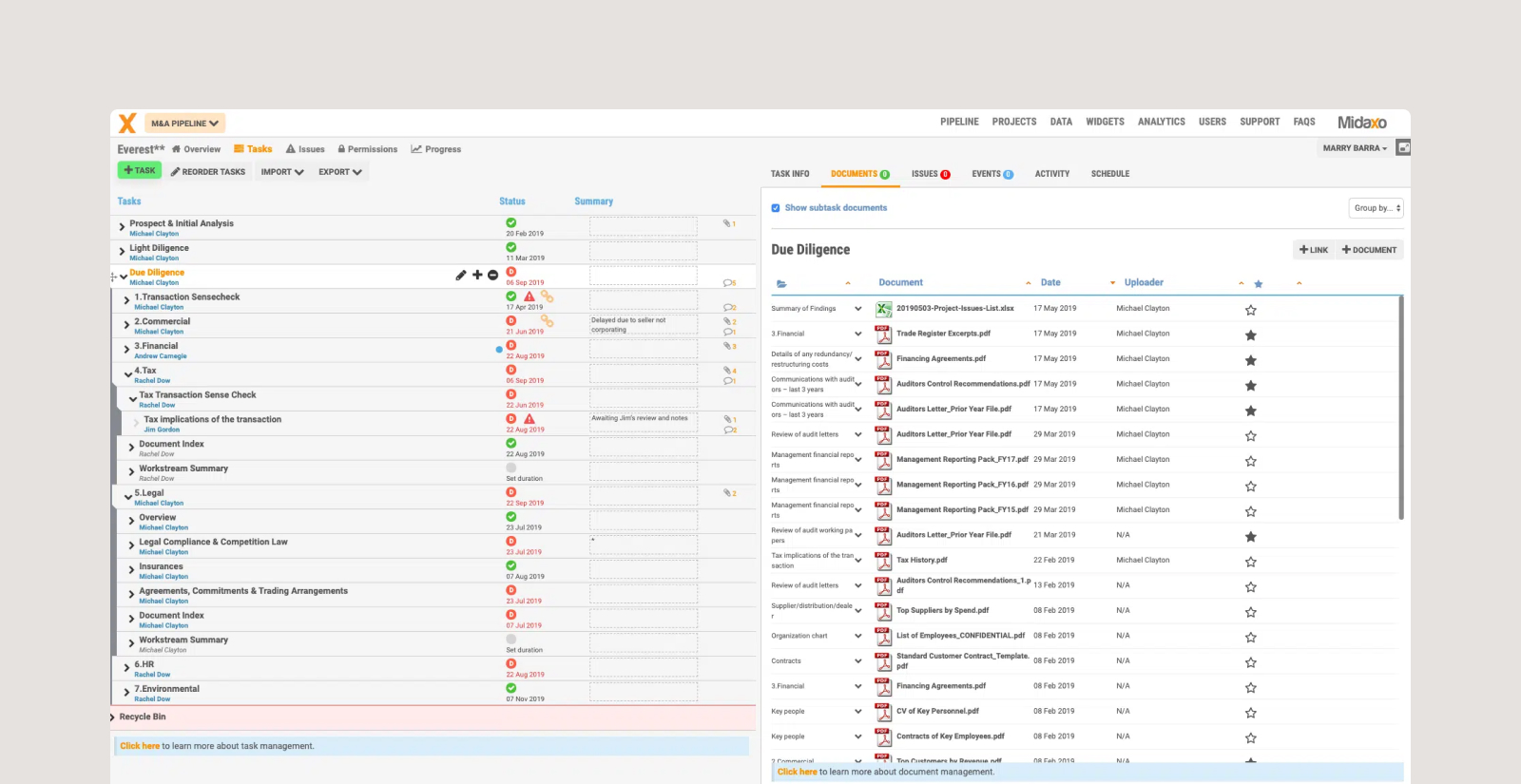
Midaxo is a cloud-based work management platform that helps corporate development teams run M&A processes from start to finish. It centralizes deal tracking, checklists, and integration plans in one place, improving collaboration and visibility.
With Midaxo AI, you can summarize and extract insights from documents, detect deal risks, and streamline project management, but you can’t adapt firm-specific workflows or generate pitch decks like you can with Hebbia. Large enterprises use Midaxo to manage multiple deals at once, reduce friction between teams, and maintain consistent value capture across transactions.
Key features:
- End-to-end workflow management: Tracks diligence checklists, integration plans, and deal pipelines in one platform.
- Collaboration and visibility: Displays live dashboards that highlight progress, blockers, and team ownership.
- Compliance and audit tracking: Logs every action and approval for transparent reporting and governance.
9. DealRoom
Best for: End-to-end deal management with pipeline to integration
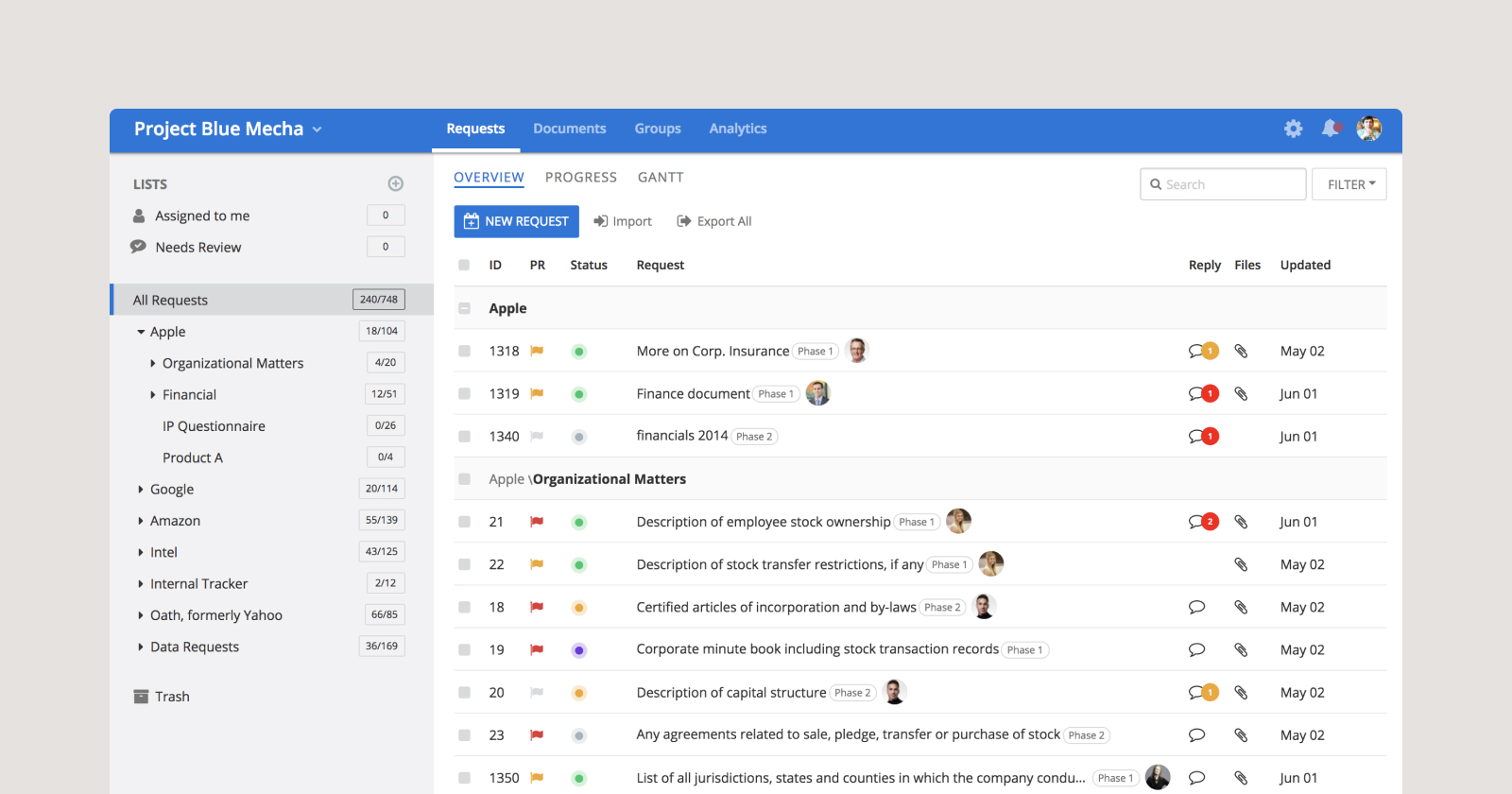
DealRoom is a work management platform built for M&A teams to manage every stage of a deal in one place. It replaces spreadsheets and email chains with a single workspace that tracks targets, organizes diligence, and streamlines integration. The platform focuses on facilitating faster communication and reducing friction between teams.
Its AI and automation tools help assign tasks, monitor progress, and maintain transparency across workflows. This platform’s strengths traditionally lie in process management, but it recently expanded into agentic analysis with the launch of DealRoom MCP.
Like other tools for financial analysis, professionals can now access LLM models through DealRoom to conduct due diligence, target research, and pipeline analysis. Still, it doesn’t build financial models, generate client-ready outputs, or guarantee clickable in-line citations.
Key features:
- Unified deal lifecycle management: Tracks pipeline, diligence, and integration in a single workspace.
- Automated task management: Assigns requests, sends reminders, and maintains accountability across teams.
- Built-in VDRs: Provides secure file sharing, permission controls, and audit trails.
- Pipeline dashboards: Offers visibility into deal status, bottlenecks, and timelines.
Matrix connects directly to sources such as S&P, CapIQ, PitchBook, and SEC filings, turning entire data rooms into a searchable, finance-native workspace.
10. Intapp DealCloud
Best for: Relationship intelligence and pipeline management
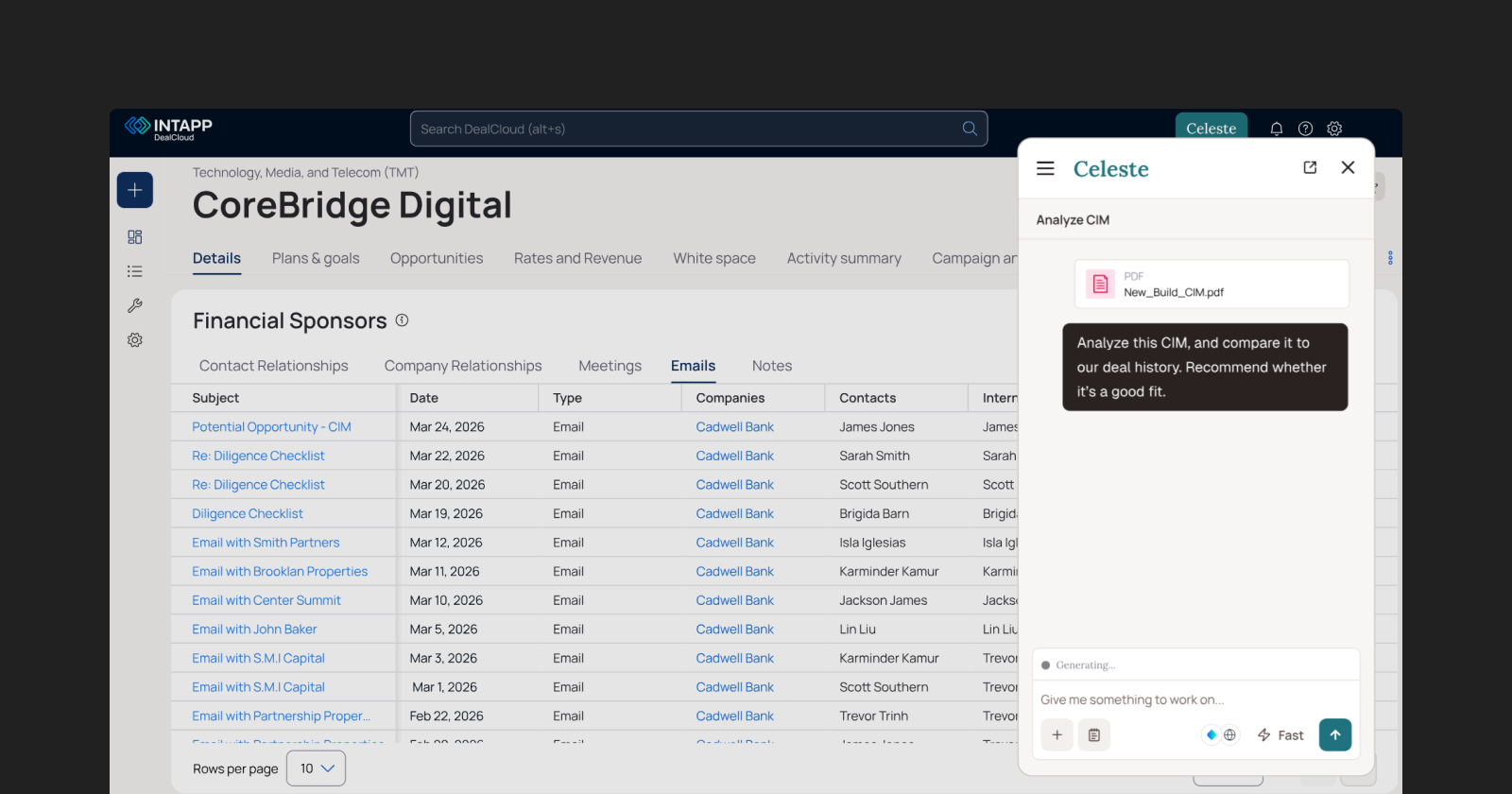
Intapp DealCloud is a deal, relationship, and pipeline management tool designed specifically for financial and legal firms, including investment banking institutions. It helps track and manage client relationships with AI-powered intelligence, build target lists, and source and pitch deals using market signals.
While it integrates with third-party data sources (such as FactSet and PitchBook) and can generate pitch materials, it lacks the document processing capabilities that Hebbia offers. This platform is specialized for deal flow management rather than complex analysis and end-to-end workflow automation.
Key features:
- AI-powered relationship management solution: Get summarized, up-to-date descriptions of each client, including an overview, a list of recent interactions, and specific opportunities and risks.
- Unified dashboard for firm-wide deal flows: Track all of your deals in one comprehensive intelligence dashboard that updates and enriches data automatically.
- Communication capture, summarization, and archival: Index all deal materials, interactions, and outcomes into a searchable database to strengthen client communication and inform future pitches.
- Integration with Intapp Data: Helps professionals source deals faster and streamline outreach with an integrated data platform that indexes and updates company and contact details.
11. Firmex
Best for: Secure document sharing and organization
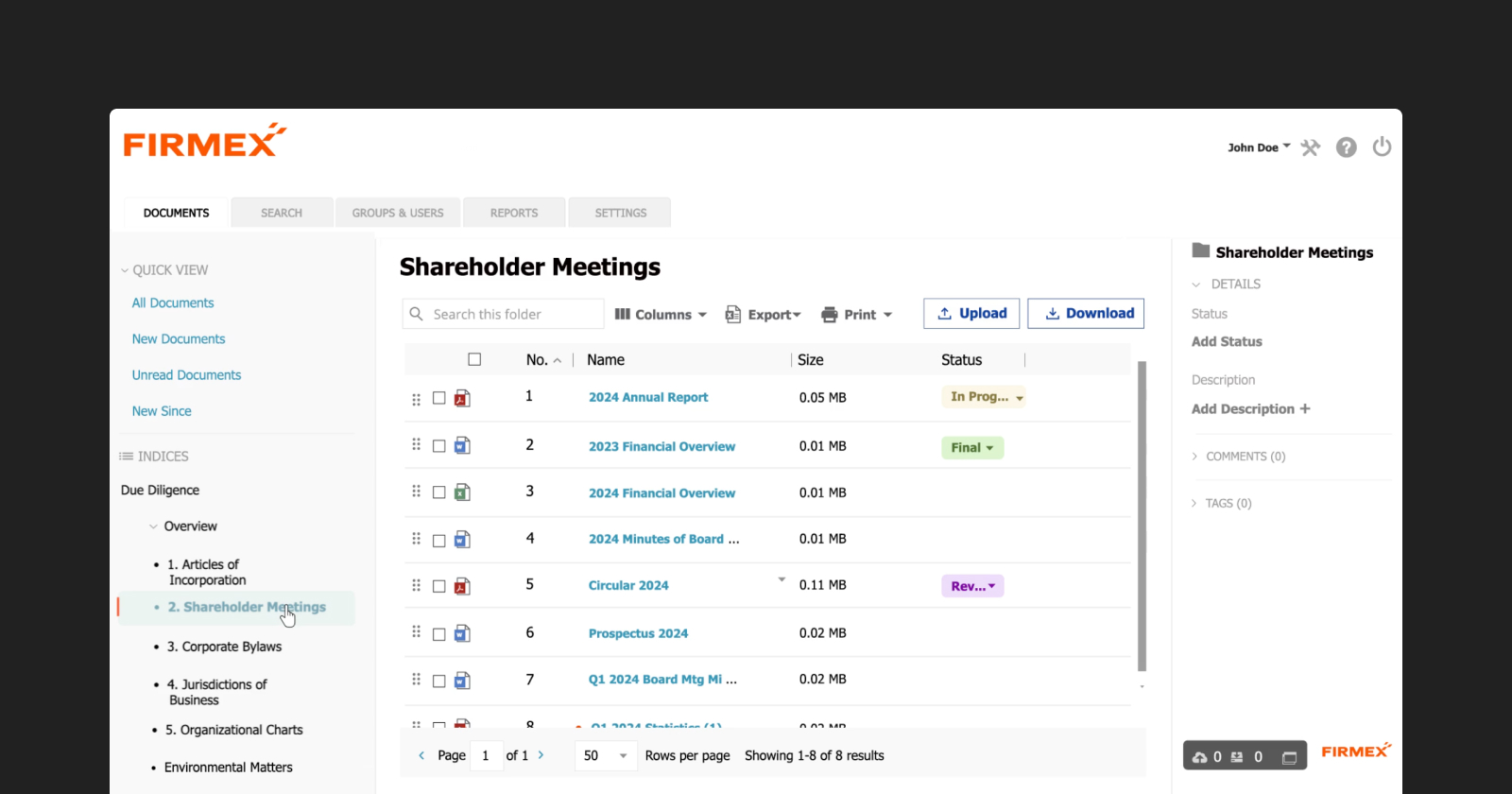
Firmex is a virtual data room platform that services firms on both the sell-side and buy-side of M&A deals. It emphasizes security, control, and collaboration, enabling investment bankers to safely store and manage deal materials.
The platform offers an annual subscription model (unlimited projects and always-on access) and a per-project payment (one project with access for a fixed, limited time).
While Firmex doesn’t include AI tools for document analysis, integrated market intelligence, or workflow automation, it serves its dedicated purpose well as a secure, easy-to-use VDR.
Key features:
- VDR with full access controls and risk management tools: Set permissions at the user and group level, keeping full control of what users can access. Cover up personally identifiable information in documents with an integrated redaction tool.
- Built-in Q&A tool to support diligence: Centralize, track, and route all buyer questions with a simple Q&A tool.
- 24/7 expert support with unlimited, specialized training: Leverage always-on expert support for quick solutions and take advantage of unlimited training sessions to learn more about the platform.
How AI Is Transforming M&A
Instead of digging through data rooms, reconciling filings, and rebuilding models from scratch, teams can now use AI M&A tools to pull key metrics, check assumptions, and produce structured outputs that drop directly into models and memos.
A 2025 Deloitte study shows how quickly this shift is taking hold. Eight-six percent of organizations use generative AI in parts of their M&A process, and nearly 40% apply it across most of their deals. The draw is simple—faster diligence and modeling without compromising accuracy.
How To Choose the Right Mergers and Acquisitions Tool or Your Business
The best solutions for M&A connect your data, automate repetitive tasks, and maintain accuracy throughout the deal lifecycle. Here is what you should be looking out for:
- Prioritize tools that can parse unstructured deal data at scale: Most deal materials live in PDFs, filings, and transcripts. Your platform should interpret that data directly so you can pull figures, covenants, and management commentary without manual work.
- Look for research-to-deliverable workflows: The strongest M&A tools let you move insights from diligence straight into models, decks, and IC memos without losing context or reformatting.
- Evaluate context window and data capacity: AI tools for M&A vary in how much they can process at once. Larger context windows allow the system to read full documents and maintain continuity across pages—critical for reviewing contracts or financials.
- Demand transparency and auditability: In M&A, every data point needs to be defensible. Choose tools that cite sources and preserve document lineage so every model input and slide number can be traced back confidently.
- Ensure integration with core data sources: The best M&A tools sync with S&P, CapIQ, PitchBook, FactSet, and SEC data to keep numbers current, eliminate export errors, and ensure models reflect real-time information.
Why Hebbia Is the Go-To AI Platform for M&A Teams
Hebbia stands out as one of the only M&A tools built for the complete deal lifecycle, not just isolated tasks. It lets firms encode their existing workflows into the platform, preserving the procedural specifics that make their process defensible. The platform accelerates and enhances analysis and production, and serves as a shared database for firm-wide intelligence with advantages that compound over time.
As a result, teams produce sharper analysis and client-ready materials faster, conduct deeper diligence, and expand coverage without adding headcount.
With 5+ years of focused development for finance, Hebbia is the largest and most trusted AI provider in the industry, used by leading investment banks to enhance their M&A processes. Book a demo today to see how it fits into your workflow.


