
Top 12 AI Financial Research Platforms for 2026: The New Leaders in Data Synthesis
Winning used to mean getting an answer before anyone else could. Most research platforms can return a fast answer today, so speed alone no longer gives your team an edge. The real competitive advantage now comes down to whether you can trust that answer enough to act on it and defend it later.
Hebbia's own research found that 59% of professionals still manually verify or recreate AI outputs most of the time. This quietly erases the time savings the tools promised.
A platform earns a permanent spot in your workflow only when it stops adding another screen to double-check. This article breaks down today's financial research platforms, the digital ecosystems that aggregate market data and financial filings. The goal is to help you find the ones that deliver answers you can act on without redoing the work yourself.
Top Financial Research Platforms at a Glance
Firms today choose from a handful of platform categories, each suited to a different part of the workflow:
- AI-powered intelligence platforms: These platforms leverage large language models to transform vast datasets into actionable insights, moving beyond traditional keyword matching to provide contextual discovery and automated document analysis.
- Institutional terminal standards: The legacy heavyweights that provide the bedrock of real-time market data, global news, and cross-asset class analytics.
- Deep fundamental and transactional intelligence: Specialized platforms focused on granular company data, private markets, and long-term historical analysis.
- Modern professional-grade alternatives: Platforms that offer high-end visuals and data depth at a more accessible price point than legacy terminals.
- Specialized and retail research tools: Tools focused on specific market segments, technical screening, or crowdsourced investment theses.
The platforms below span all five categories, broken down by the types of users each one is best for and the specific features that set them apart.
Platform | Type | Best for | Key features |
|---|---|---|---|
Hebbia | AI-powered intelligence platform | Automating multi-document synthesis and large-scale due diligence | - Integrations across major financial data and workflow platforms - Reasoning across thousands of proprietary documents, with compounding intelligence - Sentence-level citations to ensure accuracy - Forward-deployed engineers and finance practitioners building firm-specific workflows |
AlphaSense | AI-powered intelligence platform | Searching broker research and expert call transcripts | - Natural language search engine - Extensive premium content library (broker research/expert calls) - Generative Grid for comparing up to 400 documents - Keyword-driven discovery tools |
Bloomberg Terminal | Institutional terminal standard | Real-time news, fixed income, and global networking | - Industry-standard real-time news and data - Instant Bloomberg chat communication network - Global fixed-income and derivatives pricing - Comprehensive cross-asset analytics |
FactSet | Institutional terminal standard | Detailed fundamental modeling and quantitative research | - Granular historical company financials - Robust Excel integration and modeling plugins - Supply chain and geographic revenue breakdowns - Performance and risk attribution tools |
LSEG Workspace | Institutional terminal standard | Global macro analysis and multi-asset class research | - Integrated Reuters news and global economic data - Customizable, modern user interface - Extensive historical time-series data - Multi-asset investment research tools |
Morningstar Direct | Deep fundamental and transactional intelligence | Institutional fund selection and portfolio construction | - Institutional-grade mutual fund and ETF research - Proprietary risk metrics and star ratings - "Economic Moat" analysis - Portfolio ESG and sustainability analytics |
S&P Capital IQ Pro | Deep fundamental and transactional intelligence | Transaction screening and private company valuation | - Public and private entity fundamentals - Advanced M&A and capital markets screening - Sector-specific deep-dive data - Proprietary estimates data |
PitchBook | Deep fundamental and transactional intelligence | Sourcing and valuing private equity and venture capital deals | - Non-public market transaction data - Private fund performance and dry powder tracking - Limited partner insights - Historical deal multiples and valuation data |
Koyfin | Modern professional-grade alternative | Visualizing market trends and cross-asset performance | - High-fidelity charting and visualization - Intuitive browser-based dashboard interface - Broad cross-asset class data coverage - Customizable watchlists and snapshot views |
Fiscal.ai | Modern professional-grade alternative | Fundamental equity research with segment-level financial data | - Finance data-trained AI copilot - Segment and KPI granularity - Aggregated research terminal - AI-powered screener |
Seeking Alpha | Specialized and retail research tool | Diversifying equity theses with independent analyst perspectives | - Massive database of independent analyst theses - Proprietary quantitative stock ratings - Various subscription plans - Extensive retail and institutional contributor network |
Finviz | Specialized and retail research tool | High-velocity technical and fundamental stock filtering | - Instant visual market heatmaps - Automated technical pattern recognition - Fast-loading equity screening engine - Comprehensive news and insider trade tracking |
1. Hebbia

Best for: Automating multi-document synthesis and large-scale due diligence
Hebbia gives finance teams an AI platform built to reason across the private documents that drive real decisions. It has processed over 1 billion pages of financial documents for the firms running on its platform, while also connecting to the data providers that those firms already use.
Hebbia's agents reason across all of a firm's documents at once, and every output carries a citation back to its exact source. This level of traceability is why over 40% of the largest asset managers by AUM rely on Hebbia, making it the largest and most trusted AI platform in finance today.
Key features:
- Integrations across major financial data and workflow platforms: Hebbia connects to the data providers finance teams already use, including FactSet and PitchBook, so nothing lives in a separate tool.
- Reasoning across thousands of proprietary documents, with compounding intelligence: Hebbia's Matrix agents use agentic reasoning to synthesize a firm's full document set at once, and the resulting insights carry forward into every future deal instead of resetting with each new query.
- Sentence-level citations to ensure accuracy: Hebbia's proprietary iterative source decomposition (ISD) technology links every output to the exact sentence or spreadsheet cell it came from, giving teams a level of traceability that retrieval-augmented generation cannot match.
- Forward-deployed engineers and finance practitioners building firm-specific workflows: A dedicated team of engineers and former practitioners builds and codifies each firm's own processes into the platform, so senior professionals spend their time on analysis instead of manual review.
2. AlphaSense
Best for: Searching broker research and expert call transcripts
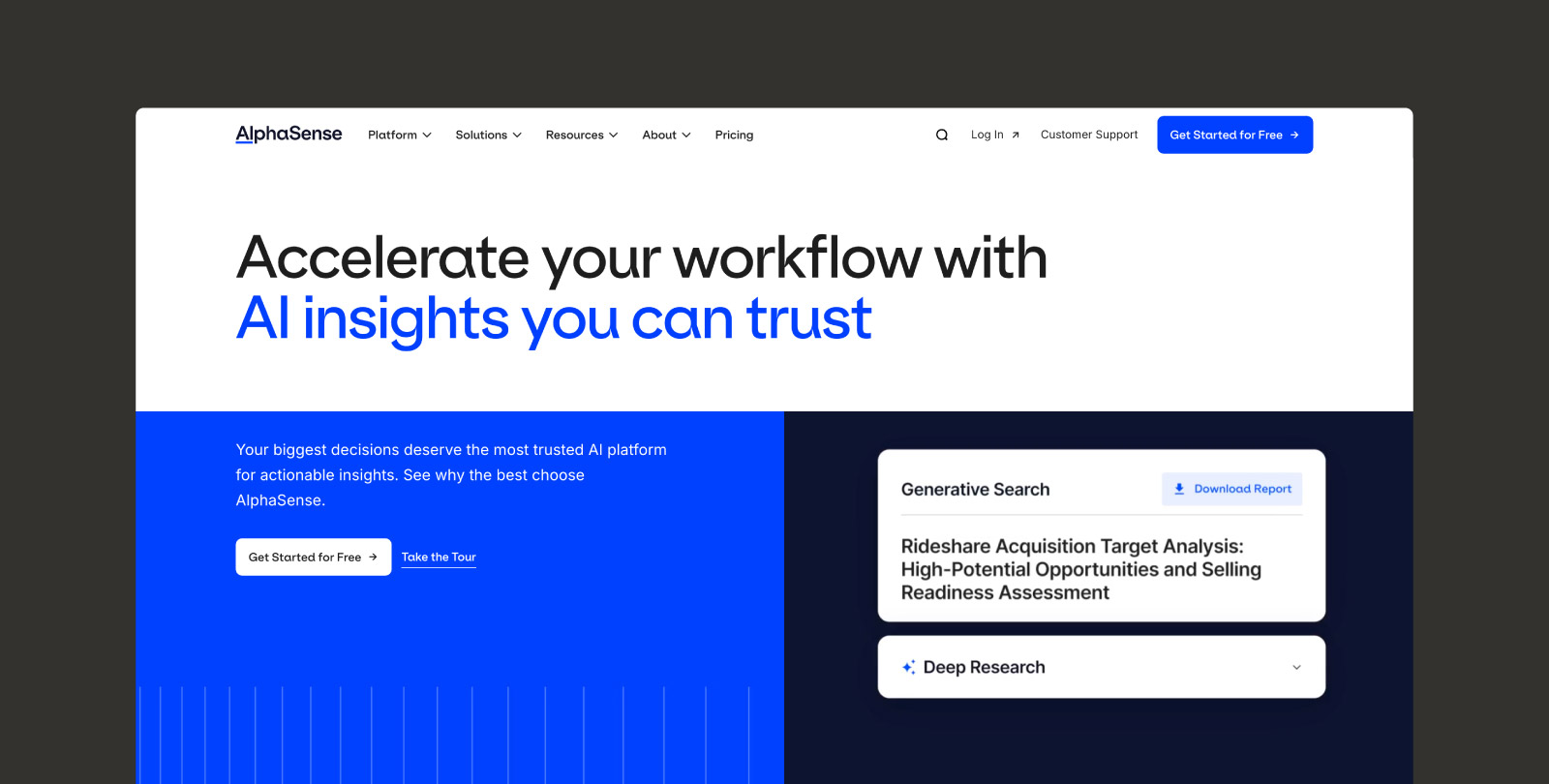
AlphaSense is a market intelligence platform used by corporate and financial teams. While third-party data coverage is narrow, it provides access to an exclusive library of insights that aggregates broker research, expert calls, SEC filing events, and breaking news headlines.
Users can upload their own private documents, cross-reference hundreds of them at once to surface key insights, and utilize pre-built templates to execute basic workflows. AlphaSense has a strong 15-year history of service for finance clients, but competitors are introducing new dimensions to AI-powered analysis and workflow automation.
Key features:
- Natural language search engine: Like with other AI-powered enterprise search tools, professionals can search across their own proprietary documents and AlphaSense’s database with natural language to quickly surface the answer or data point they need.
- Extensive premium content library (broker research/expert calls): AlphaSense provides its own library of content for researchers to use, ranging from broker research and expert interviews to call transcripts, filings, and news headlines.
- Generative Grid for comparing up to 400 documents: AlphaSense lets users combine up to 400 of their own documents and hosted data into a customizable grid interface for comparison and analysis.
- Keyword-driven discovery tools: AlphaSense’s keyword search tool lets professionals identify documents that contain a certain keyword, and automatically charts historical usage across specific companies, industries, and geographies.
3. Bloomberg Terminal
Best for: Real-time news, fixed income, and global networking
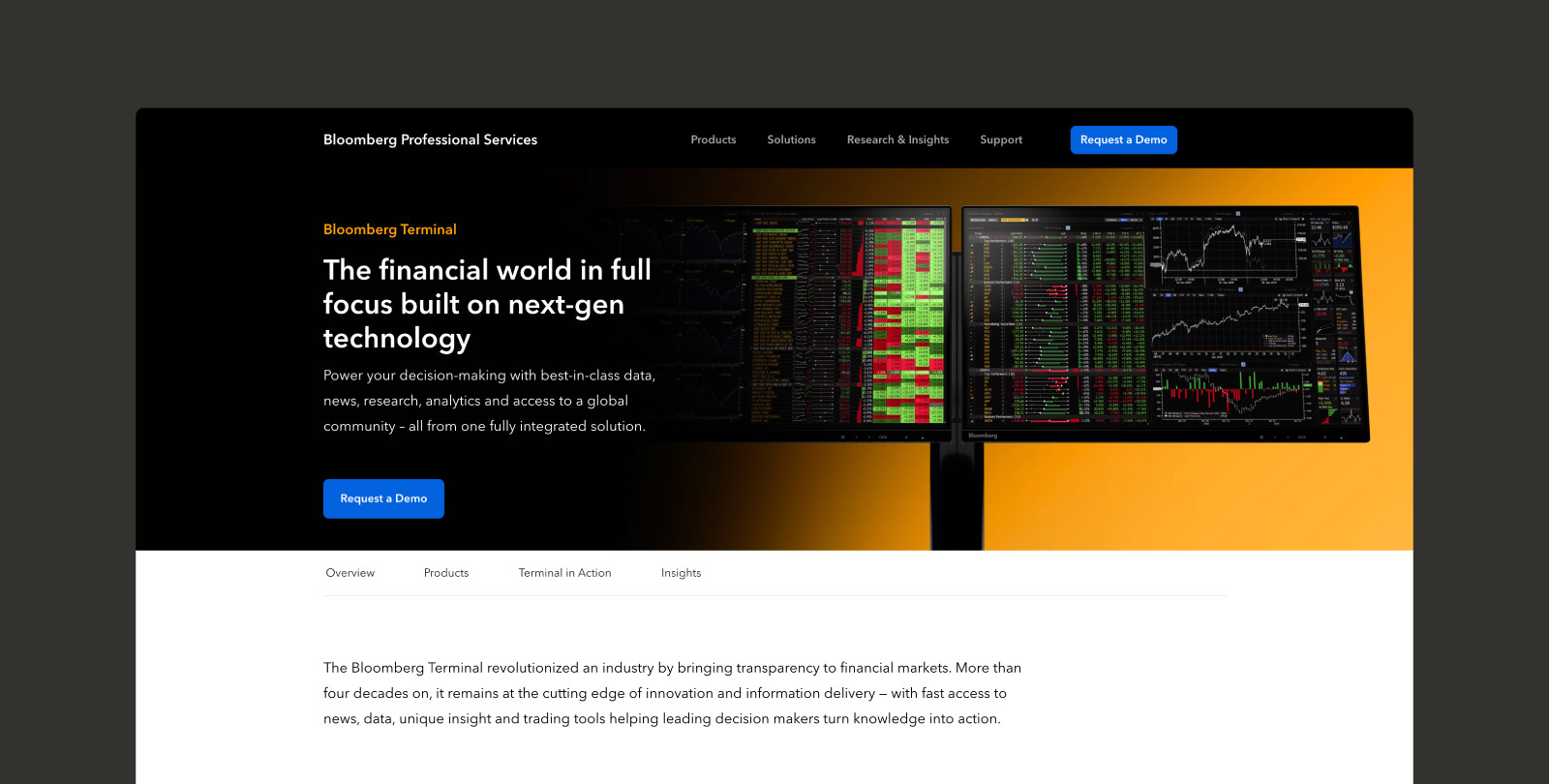
Bloomberg Terminal provides a gold-standard information ecosystem for institutions and teams across the finance industry. Since its introduction, it has stood as one of the best sources of real-time market news, stock data, macro intelligence, expert analytics, credit ratings, and more.
One of the best investment research platforms available, Bloomberg Terminal covers virtually every asset class, stock market exchange, and data vendor, so professionals can access all the data they need without leaving the platform.
Key features:
- Industry-standard real-time news and data: Bloomberg Terminal combines real-time news from over 1,000 global news agencies, expert analysis from over 1,500 researchers, and live market data into one view.
- Instant Bloomberg chat communication network: Instant Bloomberg, integrated directly into the terminal, provides a chat interface for professionals across the industry to connect and exchange information.
- Global fixed-income and derivatives pricing: Bloomberg Terminal provides independent fixed-income pricing for over 2.7 million securities and valuations for derivatives across all asset classes.
- Comprehensive cross-asset analytics: The platform integrates performance benchmarks, indices, and analysis across all asset classes.
4. FactSet
Best for: Detailed fundamental modeling and quantitative research
FactSet is a financial research platform that provides access to current and historical company, industry, and market information, in addition to alternative data. Aside from the data, FactSet provides access to comprehensive analytics solutions, including financial modeling templates, comparable analysis tools, and portfolio management solutions.
The platform features an Excel add-in that enables researchers to create and update source-linked models in real time, as well as an integrated research management system (RMS) that helps firms organize their models, reports, and notes in a single searchable interface.
Key features:
- Granular historical company financials: FactSet provides current and historical financial statements for hundreds of fundamental items dating back to 1979, covering tens of thousands of entities worldwide.
- Robust Excel integration and modeling plugins: FactSet’s Excel add-in lets researchers build financial models and slide decks that link directly to live FactSet data, including financials and estimates, as well as pricing and credit data.
- Supply chain and geographic revenue breakdowns: The platform provides insight into supply chain relationships and revenue exposure, organized by geographic region, to identify hidden opportunities, risks, and trends.
- Performance and risk attribution tools: FactSet includes in-depth portfolio analytics to enable granular performance attribution and help teams understand how to adjust strategies based on customizable stress-test scenarios.
5. LSEG Workspace
Best for: Global macro analysis and multi-asset class research
LSEG Workspace is the successor to Refinitiv Eikon. With integrated news from over 10,000 authoritative sources (including Reuters, Dow Jones, and Wall Street Journal), this financial research platform gives professionals access to low-latency, market-moving news headlines when they break.
The platform’s data coverage is very comprehensive, spanning 120 years of cross-asset financial information and global fundamentals, research reports from over 1,300 contributors, and consensus earnings forecasts. In addition, LSEG Workspace provides research and analytics tools for use cases such as portfolio management, trading, and investment banking pitch refinement.
Key features:
- Integrated Reuters news and global economic data: LSEG Workspace provides exclusive coverage from Reuters alongside other major news agencies, in addition to international industry-specific data and analyst commentary from reputable sources around the world.
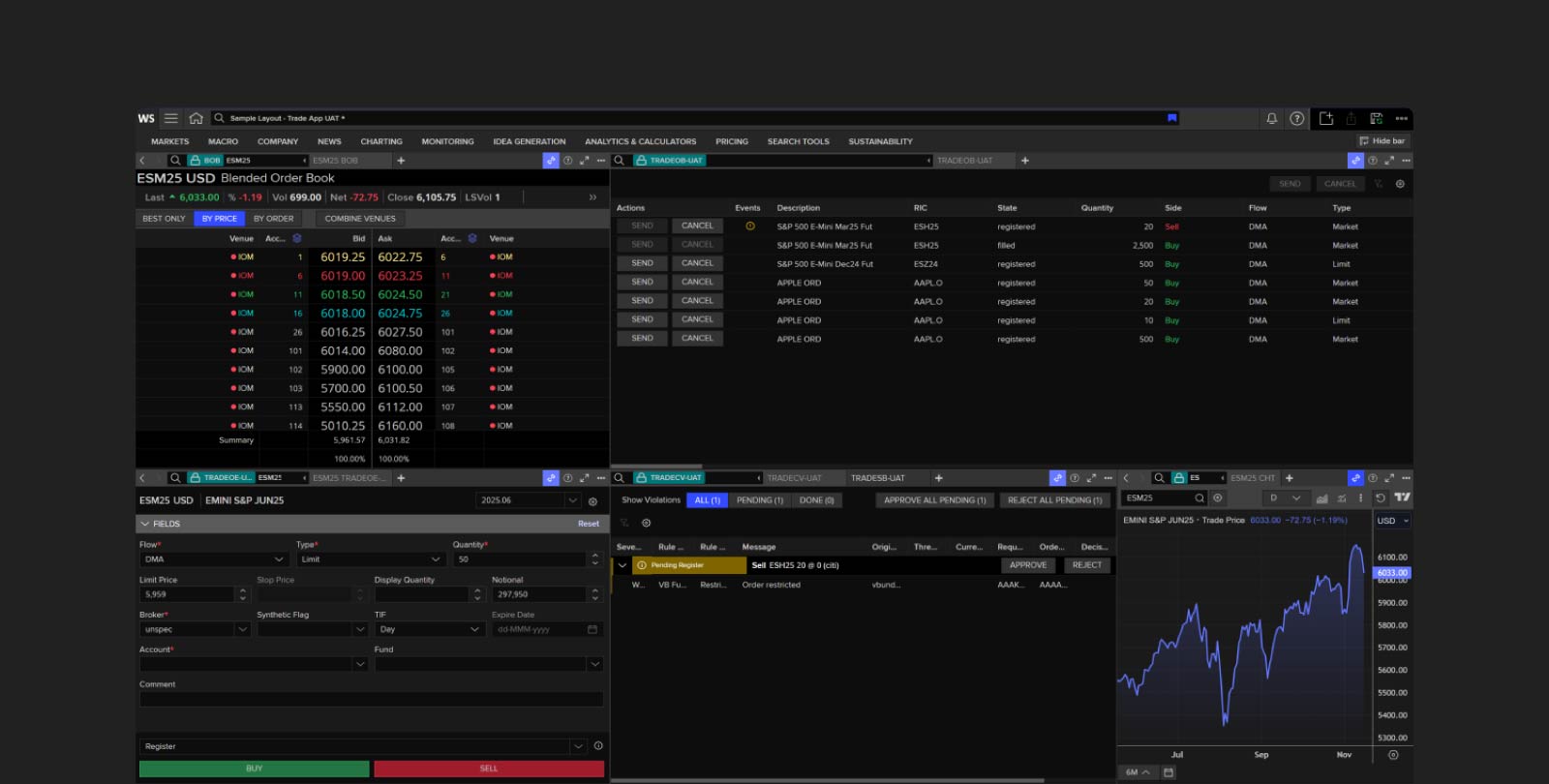
- Customizable, modern user interface: LSEG differentiates itself through its modern, customizable interface, enabling professionals to set up their own watchlist views to quickly surface the data they need.
- Extensive historical time-series data: LSEG Workspace interfaces with 25 years of time series data across 500 global stock exchanges to help researchers forecast market movements.
- Multi-asset investment research tools: The platform lets professionals access company financials, Institutional Brokers’ Estimate System (IBES) consensus estimates, valuation multiples, stress testing tools, and more.
6. Morningstar Direct
Best for: Institutional fund selection and portfolio construction
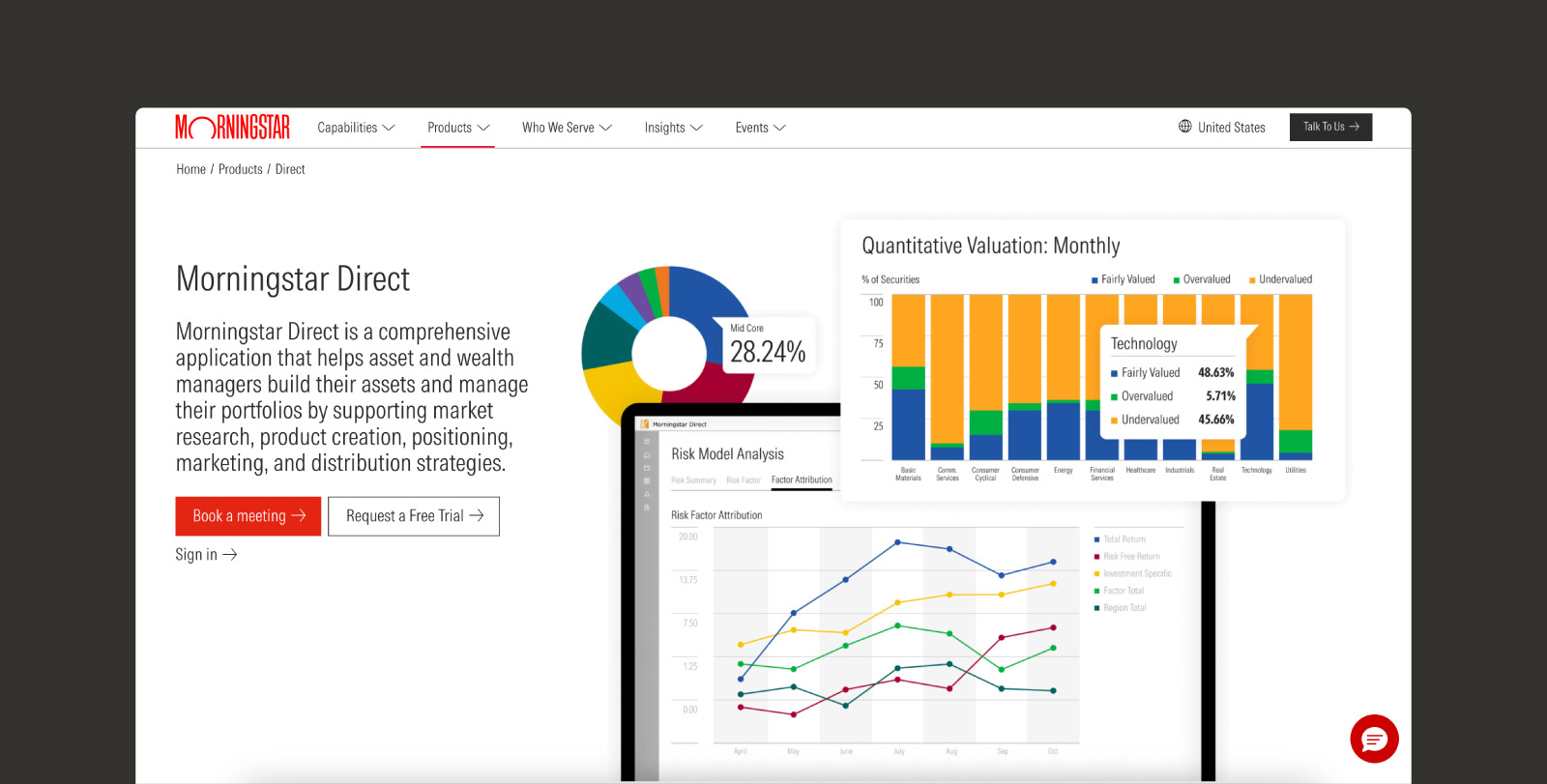
Morningstar Direct is a research platform built around a global fund database with one of the broadest coverage ranges in the industry for managed investment products, including mutual funds, exchange-traded funds (ETFs), and more. In addition to public market data, Morningstar Direct interfaces with private market intelligence from PitchBook.
Its standout feature is its ratings, which provide expert qualitative and quantitative assessments on various investment vehicles across a wide range of categories, from outperformance potential to ESG risk exposure. Its combination of features lets investors build and manage portfolios with confidence.
Key features:
- Institutional-grade mutual fund and ETF research: Morningstar covers funds globally with expert research and insights, including performance attribution, historical data, peer group benchmarking, risk exposure, and much more.
- Proprietary risk metrics and star ratings: Morningstar’s regularly updated star rating system provides standardized performance benchmarks for funds, stocks, ESG, portfolios, credit risk, and more.
- "Economic Moat" analysis: Morningstar provides a proprietary rating that analyzes a company’s competitive advantages and its ability to translate them into excess returns over time. It’s based on five factors—intangible assets, switching costs, network effects, cost advantages, and efficient scale.
- Portfolio ESG and sustainability analytics: This is another proprietary rating offered by Morningstar, which assesses risk exposure at the portfolio level to ESG factors.
7. S&P Capital IQ Pro
Best for: Transaction screening and private company valuation
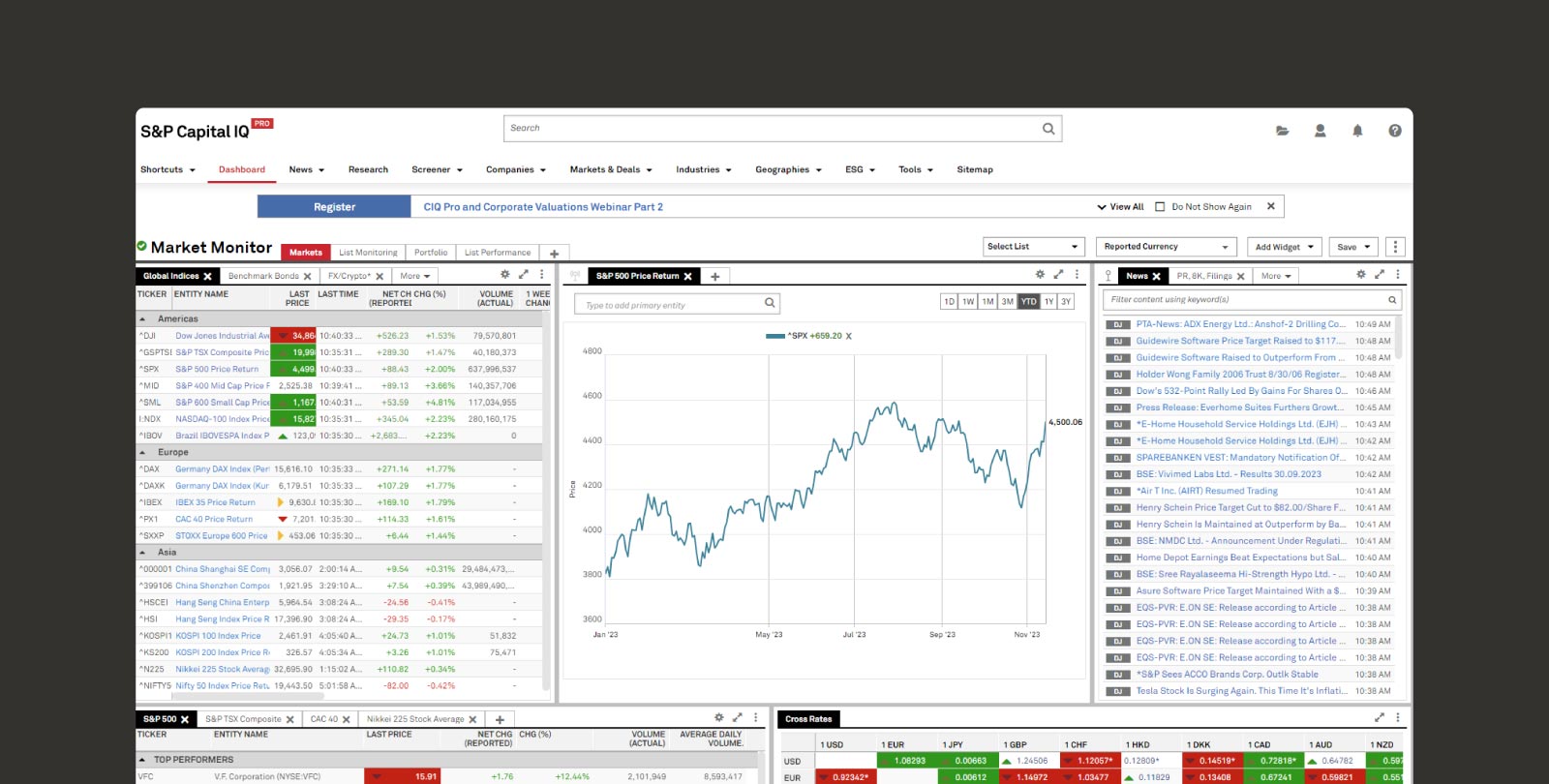
S&P Capital IQ Pro is a financial research platform with one of the most extensive repositories of fundamental data in the industry, covering financials for over 109,000 public companies and 60 million private companies. In addition, it provides sector-specific business intelligence across seven different industries and deep intelligence on consensus estimates, credit ratings, ownership structures, transactions, and macro trends.
Researchers can access live proprietary news and coverage from various newsletters covering updates across geographies and industries, create charts to assess historical trends across hundreds of technical indicators, and build source-linked models and presentations with a dedicated suite of office tools.
Key features:
- Public and private entity fundamentals: The platform is one of the most comprehensive financial data services available, giving an interface to standardized financials of public companies covering 99% of global market capitalization alongside 60 million private companies.
- Advanced M&A and capital markets screening: S&P Capital IQ Pro helps researchers seeking insights across all stages of an M&A deal. Among other things, professionals can access global transaction data and equity research, analyze comparables and credit risk, and build valuation models.
- Sector-specific deep-dive data: S&P Capital IQ Pro delivers deep proprietary intelligence across seven industries—banking, insurance, real estate, energy, metals and mining, media and telecommunications, and technology. It also includes coverage of energy and commodities through S&P Global Energy.
- Proprietary estimates data: S&P Capital IQ Pro integrates an exclusive database to analyze current and historical market expectations dating back to 2016, covering everything from consensus company estimates to industry-level estimates.
8. PitchBook
Best for: Sourcing and valuing private equity and venture capital deals
Private equity and venture capital teams turn to PitchBook for intelligence on private markets, from early financing rounds to late-stage buyouts. Because so much of that activity happens outside public filings, PitchBook has become a default reference for tracking who's raising money and who's buying whom.
The platform’s database covers private companies and their deal histories, as well as fund performance and investor activity across the market. PitchBook also tracks emerging categories well before they show up on most platforms, giving researchers detailed profiles on nascent spaces and the companies building in them.
Key features:
- Non-public market transaction data: The platform provides deep intelligence on millions of deals across private equity, venture capital, strategic M&A, and angel and seed transactions. Researchers can apply filters to find specific deal profiles, including everything from structure and terms to multiples and valuations, and benchmark decisions against precedents.
- Private fund performance and dry powder tracking: PitchBook delivers insights into private fund data, including individual profiles with dry powder estimates, cash flow multiples, internal rates of return, and more.
- Limited partner insights: PitchBook provides information on limited partners, including their historical commitments, network map, and real-time activity, helping teams zone in on the partners most likely to move forward with a commitment.
- Historical deal multiples and valuation data: This financial research software includes historical entry multiples, extensive pre- and post-money valuation data and analysis, and round-by-round capitalization table data for companies.
9. Koyfin
Best for: Visualizing market trends and cross-asset performance
Koyfin is a financial data management and analytics platform covering over 100,000 securities in over 50 stock exchanges. It aggregates multi-asset data from various third-party sources, from equity fundamentals and company financials to consensus estimates and fund data, with information updated in real time.
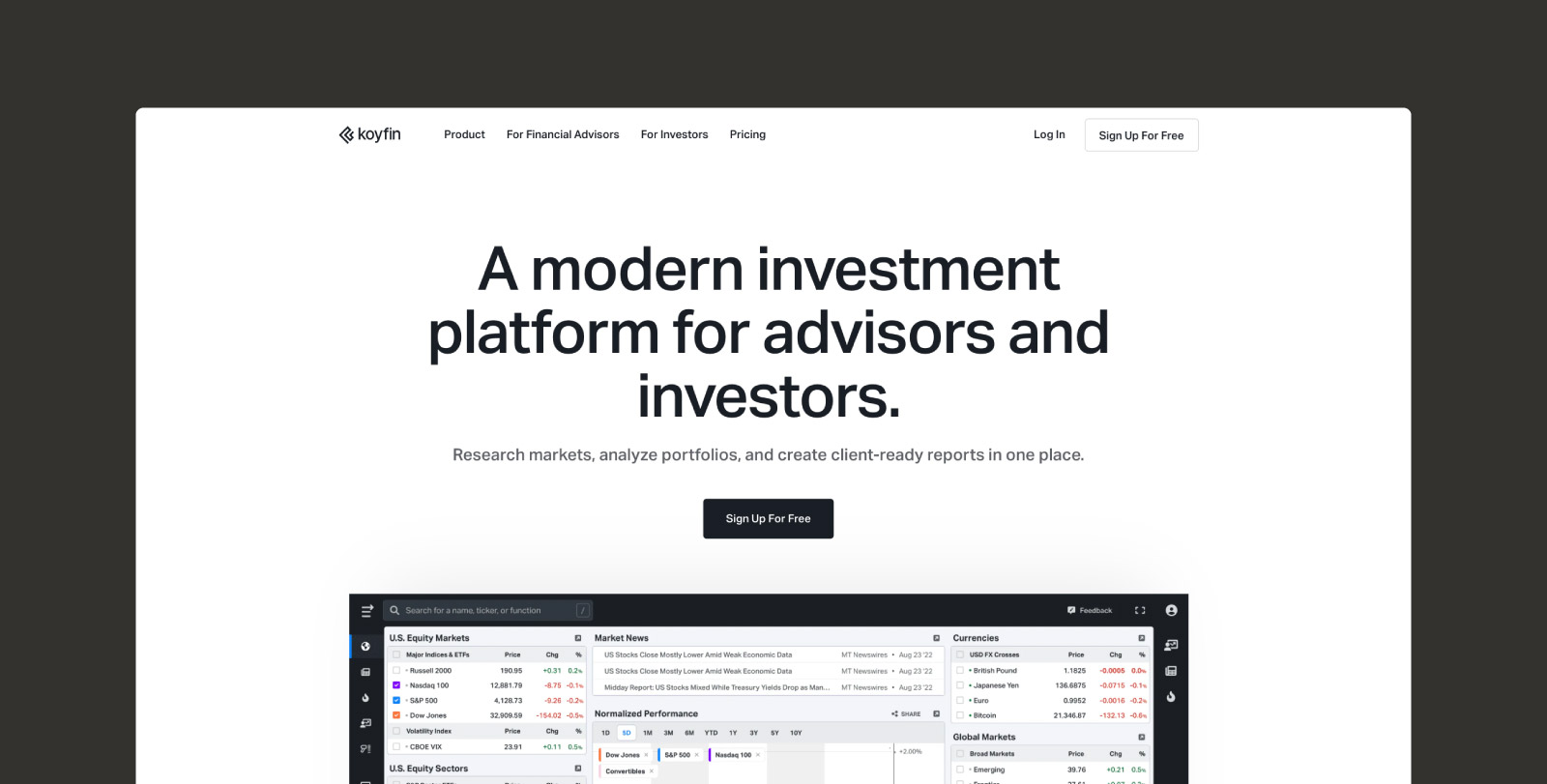
The platform packages all of its data into a customizable dashboard interface with extensive charting and analysis solutions. Professionals can modify their dashboards with their own watch lists and trackers, access portfolio management and modeling tools, and view security-level analytics (including estimates, filings, and historical performance graphs).
Key features:
- High-fidelity charting and visualization: Koyfin’s core differentiator is its advanced charting capabilities, which let professionals track a wide range of trends for specific companies, stocks, or markets. Charts can be easily branded, downloaded, and shared.
- Intuitive browser-based dashboard interface: Koyfin’s user interface is deeply customizable and can be modified to firm requirements or individual preferences. Like other investment analytics software, it features a search bar, which allows users to find entities by name, ticker, or location (and all of their associated information).
- Broad cross-asset class data coverage: Koyfin covers granular information for 80,000 companies globally across 50 years of history, in addition to U.S. and Canadian market data and global macroeconomic insights.
- Customizable watchlists and snapshot views: Users can set custom watchlists, data feeds, and chart displays to track the data they need at any given time, from fundamentals and performance to valuation updates and analyst estimates.
10. Fiscal.ai
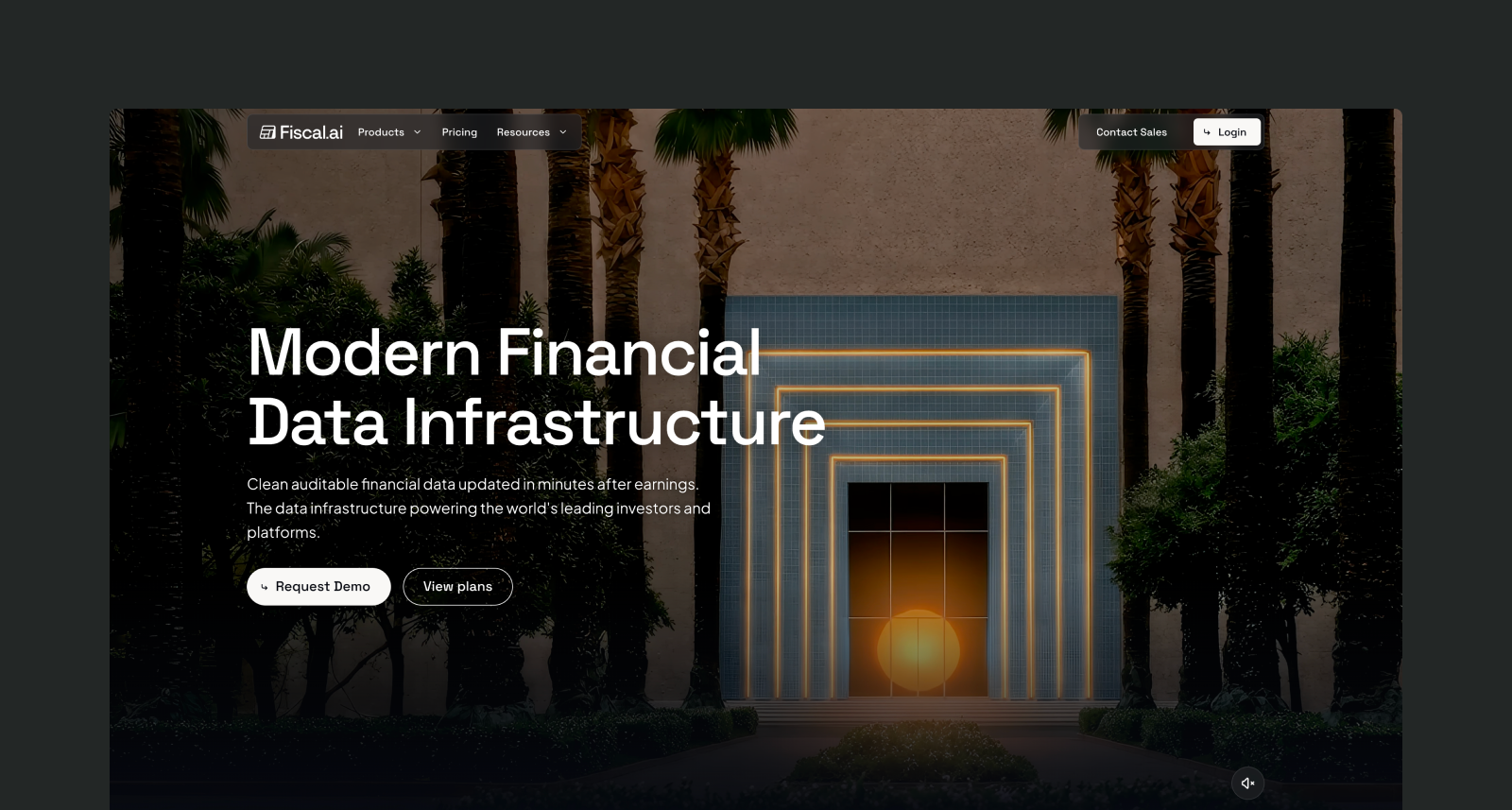
Best for: Fundamental equity research with segment-level financial data
Long-term investors and equity analysts spend a lot of time pulling apart segment-level numbers that a standard filing summary glosses over. Fiscal.ai built its AI copilot specifically for that work, training it on filings and earnings calls so answers trace back to the underlying numbers instead of a generic summary.
The platform also functions as a comprehensive research terminal, combining dashboards and company filings into one workspace rather than a dozen open tabs.
Investors can use its screener to filter by hundreds of financial metrics in plain language. This capability makes it a natural fit for the earlier research and idea generation stages before a deeper diligence tool takes over.
Key features:
- Finance data-trained AI copilot: Fiscal.ai's copilot is trained specifically on financial filings and transcripts, so it can answer detailed questions about a company's numbers instead of pulling from generic web content.
- Segment and KPI granularity: The platform breaks revenue and operating metrics down by business segment, giving analysts the level of detail that a company's own filings often summarize away.
- Aggregated research terminal: Fiscal.ai keeps filings and earnings calls in the same dashboard as watchlists, so analysts stop bouncing between separate tools mid-research.
- AI-powered screener: Investors can filter companies by financial metrics in plain language instead of building complex formulas, making it easier to turn a broad thesis into a shortlist worth researching further.
11. Seeking Alpha
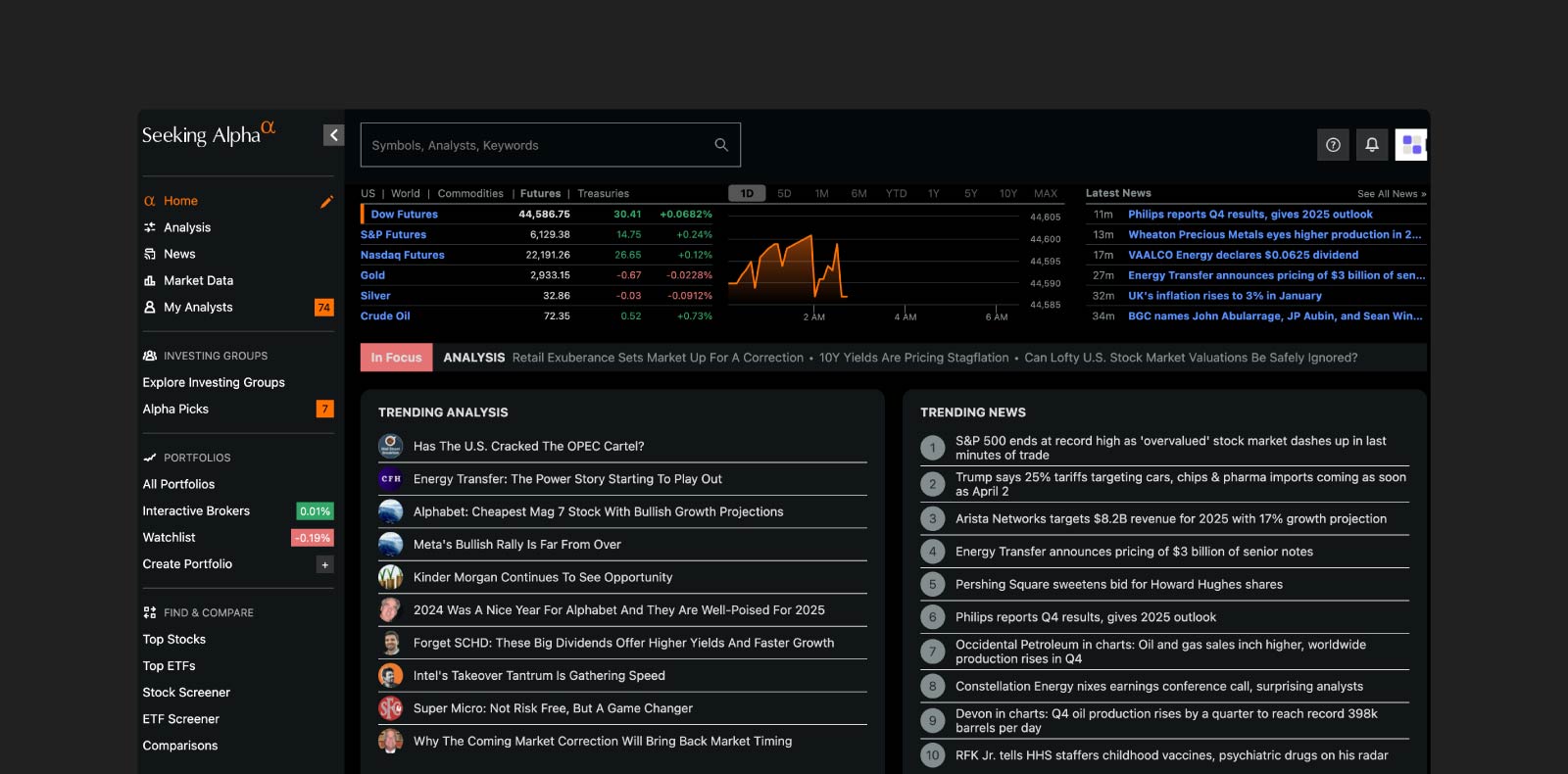
Best for: Diversifying equity theses with independent analyst perspectives
Seeking Alpha is a financial and investment research platform that provides access to crowdsourced, quality-controlled insights from thousands of verified contributors, with 5,000 unique articles per month and up to 10,000 securities covered with analysis or ratings per quarter. While the platform’s crowdsourcing approach to information is unique, it publishes month-over-month data that verifies its “strong buy” recommendations regularly outperform the market and competitors.
Crowdsourced items include equity research, stock and ETF-level analysis, and quant ratings and factor grades, each of which can be organized within a customizable dashboard interface. Professionals can also use screeners, get proactive portfolio and stock alerts, and access transcripts for earnings calls and events.
Key features:
- Massive database of independent analyst theses: Seeking Alpha unifies independent analysis articles, equity research reports, and investment theses, each of which is vetted for quality and compliance.
- Proprietary quantitative stock ratings: The platform provides various quant ratings (including “strong buy” and “sell” recommendations, dividend security grades, and aggregate analyst ratings) to inform decision-making.
- Various subscription plans: Seeking Alpha offers a free subscription tier and two paid tiers, allowing investors to tailor their payments to the specific services they need.
- Extensive retail and institutional contributor network: Insights on Seeking Alpha are delivered by a network of thousands of contributors (from individuals to institutions), totaling over 18,000 since its inception.
12. Finviz
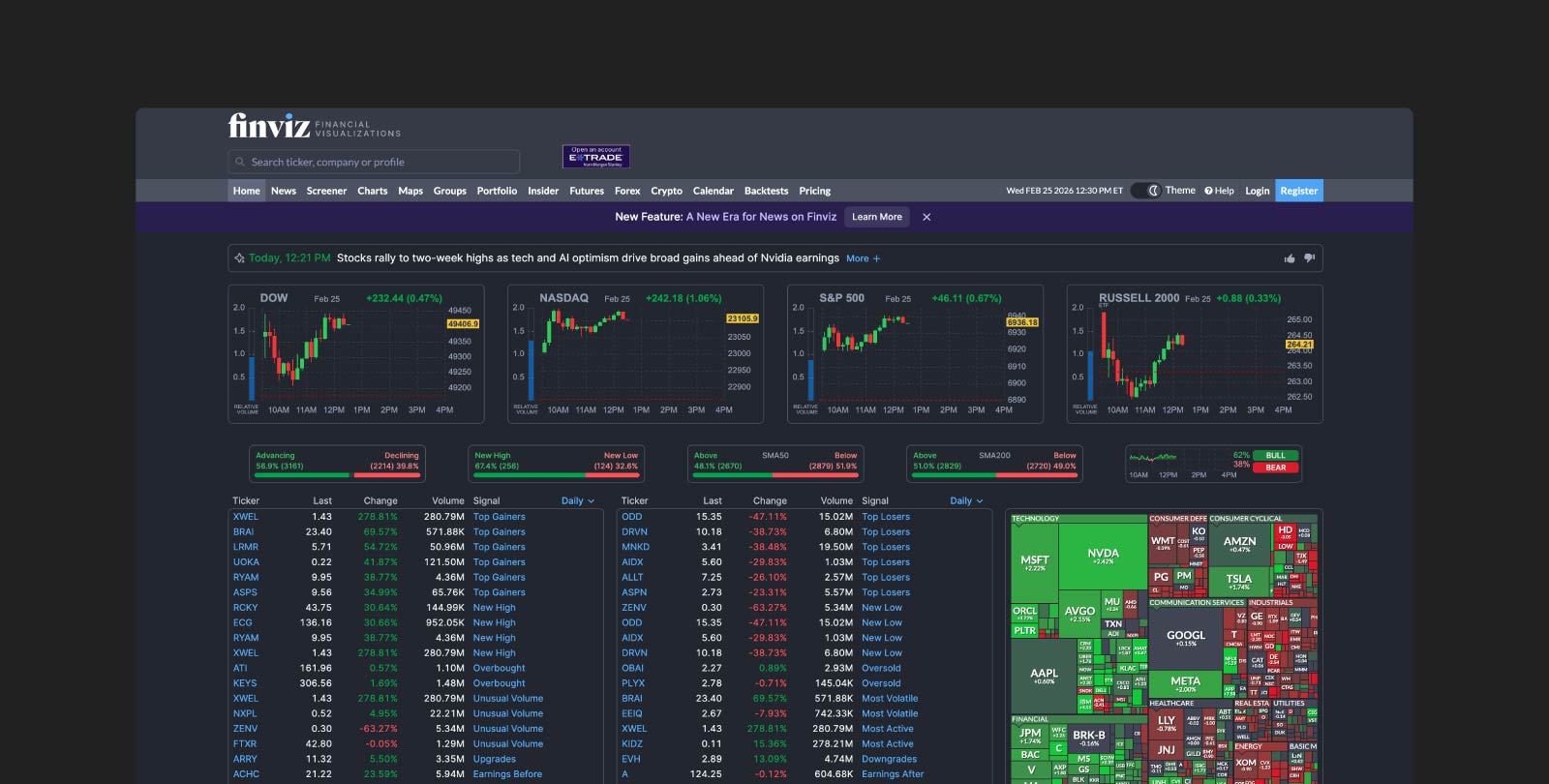
Best for: High-velocity technical and fundamental stock filtering
Finviz, short for Financial Visualizations, is a stock screening and market visualization tool that provides researchers with minute-by-minute information. It includes news headlines, charting tools with real-time alerts, and treemaps that display asset performance across various timeframes.
Researchers can use this platform to track market movements and inform trading decisions in real time, and even optimize their investment strategies with in-house backtesting tools.
Key features:
- Instant visual market heatmaps: Finviz provides color-coded heatmaps that display real-time performance broken down by sector, index, or security type.
- Automated technical pattern recognition: Paid plan subscribers can set up charts with automated pattern recognition and technical indicators, including dozens of chart and candlestick patterns.
- Fast-loading equity screening engine: Finviz’s screener lets users filter thousands of stocks, ETFs, and more using nearly 100 combined fundamental criteria and technical signals.
- Comprehensive news and insider trade tracking: The platform includes a searchable, minute-by-minute news feed covering market, stock, ETF, and crypto news.
How To Choose the Best Financial Research Tool For Your Role
Choosing the best financial research platform comes down to considering the needs of your role above all else. If you’re part of a private equity team, your research needs will be a lot different from what hedge fund analysts require, for example.
In this section, we break down the best platforms to implement based on your specific role.
Private Equity
For private equity professionals sourcing deals or conducting due diligence, raw market data is extremely valuable. PitchBook and S&P Capital IQ Pro turn private market data, from deal history to company financials, into intelligence PE teams can act on. These data points help private equity teams build accurate valuations and refine deal terms.
But for full diligence, teams will still need to cross-reference that third-party data with virtual data room (VDR) documents. Hebbia integrates with both PitchBook and Preqin data while allowing users to upload entire VDRs, providing a single interface to conduct complete, AI-powered due diligence across all relevant data with unmatched speed and accuracy at scale.
Public Equity
Public equity analysts operate in an environment with continuously recalibrating views. A competitive edge comes from immediate access to and rapid analysis of market-moving data. Teams need platforms like Bloomberg and FactSet for real-time market insights, and true outperformance comes when those insights are synthesized with other data sources (such as earnings call transcripts and SEC filings) to surface weak signals and hidden patterns (such as sentiment shifts) ahead of the market.
The best AI tools for financial analysis consolidate all of this data together and provide teams with the ability to quickly reason across it. Many solutions offer basic AI-powered keyword search, but AI-native platforms like Hebbia provide far more advanced tools like specialized AI agents that can reason across thousands of documents simultaneously to synthesize data and map key themes. This lets analysts automate the discovery phase and spend more time on qualitative forecasting and thesis iteration.
Investment Banking
In investment banking, professionals need to stay up to date on all relevant data across multiple sources to produce accurate client materials. Platforms like Bloomberg are very useful for investment banking, providing new headlines and data as soon as they become available. Others, such as S&P Capital IQ and FactSet, let bankers review various comparables for public companies.
When these sources are integrated with an AI platform like Hebbia, professionals can rapidly synthesize billions of data points (such as founder names, financials, and other company details) to surface strategic insights without repetitive drudgery or reliance on offshored inputs. Hebbia’s generative AI capabilities enable the consolidation of data into fully formatted deliverables, such as strip profiles, confidential information memoranda (CIMs), and pitch decks complete with charts, tables, and source-linked financial models.
Credit
In credit, success is defined by capital preservation and identifying the fat-tail risks that often go overlooked when relying on traditional data alone. Bloomberg and S&P Capital IQ Pro are the industry-standard providers for credit ratings, market pricing, spread history, and more—these platforms are extremely useful for synthesizing conclusions and identifying trends.
However, the actual risk often lies in the actual legal agreements (covenants, indentures, and credit docs) that these ratings and historical insights aggregate. Hebbia acts as the reasoning engine that reads the fine print at scale. It can extract negative covenants, lien restrictions, and change-of-control triggers from hundreds of financing documents simultaneously.
For example, Hebbia’s Matrix agents can scan a full portfolio for specific loopholes, such as unrestricted subsidiary "drops" or subordination risks, that are often buried in document footnotes. Hebbia can also significantly reduce manual review cycles by synthesizing nuanced risks and assessments across raw filings.
Why Leading Teams Build on Hebbia
For years, finance teams have had more than enough data thanks to platforms like Bloomberg, PitchBook, LSEG, and FactSet. Making sense of that data is the real challenge, and it falls to you to triage those sources and condense the information into neat outputs.
Hebbia’s AI solutions speed up and enhance this process. Instead of manually searching for needles in haystacks or building decks, teams can use agentic reasoning to rapidly analyze data across separate sources in context and synthesize it all into fully formatted deliverables.
Whether you're running due diligence on a private equity deal or monitoring covenant compliance across a credit portfolio, your edge comes from synthesizing faster without sacrificing rigor. The teams that do this consistently deliver better insights and win more deals.
See how Hebbia works and request a demo to experience the Matrix interface firsthand.


